
Assalamualaikum
I would like to find out what should I do I have recurring doubts in 99% of my salaah for the past few month. I am always doubting the number of rakaats;sajdahs ,whether I read and pronounced my surah/duas etc correctly. This leads me to continuously repeat my salaah.
I have tried looking at the respective areas whilst in different positions in salaah. I make intention in ever salaah to focus but somehow or the other either my mind wanders or just start doubting my pronunciation or recitation. Im really not sure what to do. At times I ignore it and tell and don’t repeat other time I end up making sajdah e sawh but I have this continuous fear that my salaah is not accepted and more often than not I end up repeating my salaah numerous times.
Please can you advise me with regards to the above matter and how I can overcome it. If I tell myself to ignore then my mind keeps telling me what if you didn’t do it and ur salaah won’t be accepted. I have a similar problem when making wudhu but it’s not as bad as my salaah. With salaah it happens in the whole salaah whether it’s fardh, sunnah or nafl 99% of the time.
Answer:
A Mu’min should not give in to doubts and whisperings regarding Ibadaat. Shaytaan wishes to frustrate one and eventually cause one to abandon all A’amaal in this way.
Sayyiduna Abu Hurayrah Radiyallahu Anhu narrates that Rasulullah ﷺ said: “[Shaytaan] tries to interfere with the person and his thoughts saying, ‘Remember this and that which he has not thought [before Salaah]’, till the person forgets how many [Raka’ah] he has prayed.”[i]
The ruling regarding doubts in Salaah are as follows:
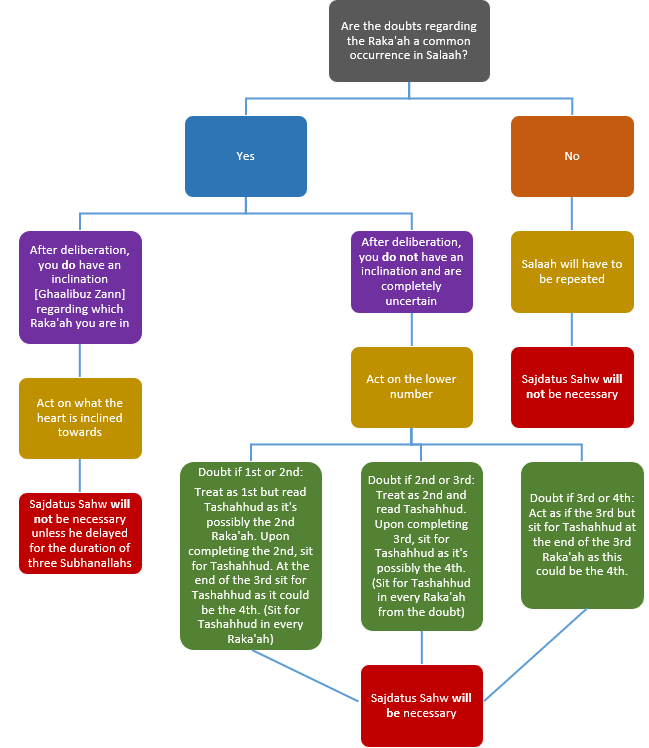
This is a very easy and simple rule to follow and does not cause any difficulty. Therefore, when any doubts occur and if Shaytaan tries to influence you that your Salaah or Ibaadah are not valid then pay no attention to it and submit to the ruling given by the Fuqaha. The knowledge of the ruling is sufficient as a cure for these doubts.
Imam Malik Rahimahullah reports that a person complained to Qasim bin Muhammad Rahimahullah that he is afflicted with doubts in his Salaah and this is happening frequently. He advised him, “Continue with your Salaah since these doubts will not go away until you complete your Salaah [and will continue doubting] and say that my Salaah is not valid.”[ii]
Dealing with Waswasah in general:
In Qur’an, we are guided to deal with whisperings in the following manner:
وَإِمَّا يَنزَغَنَّكَ مِنَ ٱلشَّيْطَـٰنِ نَزْغٌۭ فَٱسْتَعِذْ بِٱللَّهِ ۚ إِنَّهُۥ سَمِيعٌ عَلِيمٌ ٢٠٠
And if an evil suggestion comes to you from Satan, then seek refuge in Allah. Indeed, He is Hearing and Knowing. (S7:V200)
وَقُل رَّبِّ أَعُوذُ بِكَ مِنْ هَمَزَٰتِ ٱلشَّيَـٰطِينِ ٩٧ وَأَعُوذُ بِكَ رَبِّ أَن يَحْضُرُونِ ٩٨
And say, “My Lord, I seek refuge in You from the incitements of the devils, and I seek refuge in You, my Lord, even from their coming near me.” (S23:V98)
And from the Ahaadith:
Sayyiduna Abu Huraira Radiyallahu Anhu reported from Rasulullah ﷺ regarding a person who has evil thoughts about Allah ﷻ should “seek refuge in Allah and keep away (from such thoughts).”[iii] i.e. Read the following (even if in your heart);
أَعـوذُ بِاللهِ or أَعـوذُ بِاللهِ مِنَ الشَّيْـطانِ الرَّجيـم
And in another narration he should say,
“آمَنْتُ بِاللَّهِ وَرُسُلِهِ”
(I affirm my faith in Allah and his Messengers)[iv]
Sayyiduna Abu Bakr Radiyallahu Anhu said: “O Messenger of Allah ﷺ, command me with something that I may say when I reach morning and evening. He said: ‘Say:
اَللّٰهُمَّ فَاطِرَ السَّمٰوَاتِ وَالْأَرْضِ ، عَالِمَ الْغَيْبِ وَالشَّهَادَةِ ، رَبَّ كُلِّ شَيْءٍ وَّمَلِيْكَهُ ، أَشْهَدُ أَنْ لَّا إِلٰهَ إِلَّا أَنْتَ ، أَعُوْذُ بِكَ مِنْ شَرِّ نَفْسِيْ ، وَمِنْ شَرِّ الشَّيْطَانِ وَشِرْكِهِ ، وَأَنْ أَقْتَرِفَ عَلَىٰ نَفْسِيْ سُوْءًا أَوْ أَجُرَّهُ إِلَىٰ مُسْلِمٍ.
O Allah, Creator of the heavens and the earth, Knower of the unseen and the seen, the Lord and Sovereign of everything; I bear witness that there is no god worthy of worship but You. I seek Your protection from the evil of my own self, from the evil of Shaytaan and from the evil of polytheism to which he calls, and from inflicting evil on myself, or bringing it upon a Muslim.’
He said: ‘Say it when you reach morning, and evening, and when you go to bed.’[v]
A summary of the teachings of Ml Ashraf Ali Thanwi Rahimahullah:
Shaytaan only casts whisperings in a heart that has Imaan. Instead of being grieved by whisperings, a person should be pleased by them because Shaytaan’s casting of whisperings into his heart is a sign that the wealth of Imaan is present in it. Whisperings do not negate sincerity. However, if they are wittingly brought, they would negate devotion. If they are unwitting, they will not even negate devotion [in Ibaadah].
A Hadith gives glad tidings in this regard:
Sayyiduna Abu Huraira Radiyallahu Anhu reported that some people from amongst the Sahaba of Nabi ﷺ came to him ﷺ and said: “Verily we perceive in our minds such thoughts which every one of us considers it too grave to express.” He ﷺ said: “Do you really perceive it?” They said: “Yes.” Upon this he ﷺ remarked: “That is pure Imaan.”[vi]
For every distressing condition which you experience, you must have full conviction of being rewarded for it. Hazrat Moulana Rahimahullah advised a seeker:
‘Let alone unbelief, they are not even sins. Do not fear in the least. There is no accountability whatsoever on whisperings. Instead, they entail some sort of striving through which proximity [to Allah Ta’ala] increases.’
The best way of putting an end to Waswasah is to disregard them totally. Do not even turn your attention towards them. In fact, do not even turn to them with the intention of repulsing them. You should rather turn your attention to Dhikr and occupy yourself in it. But here too, do not go to extremes.
Waswasah can be caused by different reasons including medical conditions, evils of the self, Satanic influences, sins, and as a test from Allah ﷻ, or a combination of them. A person should also consult a Hakeem or medical doctor for treatment. You should resort to fortifying tonics and refreshing practices to strengthen and relax the heart. Do not go to extremes in abstaining from permissible occupations and do not opt for total solitude.
If a person wants to remove the air which is in a bottle, a simple way of doing it is to fill it with water. The same applies to the heart. Simple household tasks and distractions are enough. For example, arrangements for one’s livelihood, a little recreation, reading history books, and so on, all within the confines of Shariah. No matter what the cause of unintentional whisperings, a person is neither taken to task for them nor should they cause fear and grief.
At the same time, the person must not wait for the results as this will result in hastiness and apprehension. A person must be totally prepared and think to himself: “Even if my entire life passes without salvation from whisperings, I am not bothered. I am going to continue doing what I have been ordered to do. I am not accountable for anything more.” And in every condition and situation, firmly believe and be conscious of this fact and essential belief that Allah ﷻ is the absolute controller and the all-wise Being. Since Allah ﷻ is the absolute controller, He does as He wills to His servants. No one has the right to object. Since He is the all-wise Being, we must be fully convinced that every action of His is based on absolute wisdom even though we may not know the details of this wisdom.
In conclusion, the one should repulse Waswasah by avoiding them totally and without trying to answer the doubts or trying to repulse them. This is simply done by intentionally occupying the mind in Zikrullah or some permissible act.[vii]
And Allah Ta’ala knows best
Shukran
Was Salaam
Moulana Muhammed Fakroodeen
Checked & Approved
Mufti Taahir Hansa
Jamiatul Ulama (KZN) – Fatwa Department
Jamiatul Ulama (KZN)
Disclaimer: The answer hereby given is specifically based on the question asked and should be read together with the question asked. The Jamiatul Ulama (KZN) bears no responsibility to any party who may or may not act on this answer. The Jamiatul Ulama (KZN) being hereby exempted from loss or damage howsoever caused. Should the question refer to a matter in dispute between two parties, this answer may not be used in the dispute by either party unless the question was jointly submitted by both parties with an acknowledgement by both parties that the question correctly and accurately represents the points in dispute.
All answers are given based on the Hanafi School of thought unless stated otherwise.
[vii] Adapted from Ashrafus Sawanih and A Sufi Study of Hadith
[i] حَدَّثَنَا مُعَاذُ بْنُ فَضَالَةَ، حَدَّثَنَا هِشَامُ بْنُ أَبِي عَبْدِ اللَّهِ الدَّسْتَوَائِيُّ، عَنْ يَحْيَى بْنِ أَبِي كَثِيرٍ، عَنْ أَبِي سَلَمَةَ، عَنْ أَبِي هُرَيْرَةَ ـ رضى الله عنه ـ قَالَ قَالَ رَسُولُ اللَّهِ صلى الله عليه وسلم “ إِذَا نُودِيَ بِالصَّلاَةِ أَدْبَرَ الشَّيْطَانُ وَلَهُ ضُرَاطٌ حَتَّى لاَ يَسْمَعَ الأَذَانَ، فَإِذَا قُضِيَ الأَذَانُ أَقْبَلَ، فَإِذَا ثُوِّبَ بِهَا أَدْبَرَ فَإِذَا قُضِيَ التَّثْوِيبُ أَقْبَلَ حَتَّى يَخْطِرَ بَيْنَ الْمَرْءِ وَنَفْسِهِ يَقُولُ اذْكُرْ كَذَا وَكَذَا مَا لَمْ يَكُنْ يَذْكُرُ حَتَّى يَظَلَّ الرَّجُلُ إِنْ يَدْرِي كَمْ صَلَّى، فَإِذَا لَمْ يَدْرِ أَحَدُكُمْ كَمْ صَلَّى ثَلاَثًا أَوْ أَرْبَعًا فَلْيَسْجُدْ سَجْدَتَيْنِ وَهْوَ جَالِسٌ ”. (بخاري 1231)
[ii] موطأ مالك – رواية يحيى – ت عبد الباقي – 1/100
3- وَحَدَّثَنِي عَنْ مَالِكٍ أَنَّهُ بَلَغَهُ أَنَّ رَجُلًا سَأَلَ الْقَاسِمَ بْنَ مُحَمَّدٍ فَقَالَ: إِنِّي أَهِمُ فِي صَلَاتِي. فَيَكْثُرُ ذَلِكَ عَلَيَّ. فَقَالَ الْقَاسِمُ بْنُ مُحَمَّدٍ ” امْضِ فِي صَلَاتِكَ. فَإِنَّهُ لَنْ يَذْهَبَ عَنْكَ، حَتَّى تَنْصَرِفَ وَأَنْتَ تَقُولُ: مَا أَتْمَمْتُ صَلَاتِي ”
الحجة على أهل المدينة – 1/229:
وَقد روى فقيهكم مَالك بن انس عَن الْقَاسِم بن مُحَمَّد ان رجلا قَالَ لَهُ انى اهم فِي صَلَاتي فيكثر ذَلِك عَليّ فَقَالَ لَهُ ابو الْقَاسِم بن مُحَمَّد امْضِ على صَلَاتك فانه لن يذهب ذَلِك عَنْك حَتَّى تَنْصَرِف وانت تَقول مَا اتممت صَلَاتي
[iii] أَنَّ أَبَا هُرَيْرَةَ، قَالَ قَالَ رَسُولُ اللَّهِ صلى الله عليه وسلم “ يَأْتِي الشَّيْطَانُ أَحَدَكُمْ فَيَقُولُ مَنْ خَلَقَ كَذَا وَكَذَا حَتَّى يَقُولَ لَهُ مَنْ خَلَقَ رَبَّكَ فَإِذَا بَلَغَ ذَلِكَ فَلْيَسْتَعِذْ بِاللَّهِ وَلْيَنْتَهِ ” . (مسلم 134)
[iv] عَنْ أَبِي هُرَيْرَةَ، قَالَ قَالَ رَسُولُ اللَّهِ صلى الله عليه وسلم “ لاَ يَزَالُ النَّاسُ يَتَسَاءَلُونَ حَتَّى يُقَالَ هَذَا خَلَقَ اللَّهُ الْخَلْقَ فَمَنْ خَلَقَ اللَّهَ فَمَنْ وَجَدَ مِنْ ذَلِكَ شَيْئًا فَلْيَقُلْ آمَنْتُ بِاللَّهِ ” .…عَنْ هِشَامِ بْنِ عُرْوَةَ، بِهَذَا الإِسْنَادِ أَنَّ رَسُولَ اللَّهِ صلى الله عليه وسلم قَالَ ” يَأْتِي الشَّيْطَانُ أَحَدَكُمْ فَيَقُولُ مَنْ خَلَقَ السَّمَاءَ مَنْ خَلَقَ الأَرْضَ فَيَقُولُ اللَّهُ ” . ثُمَّ ذَكَرَ بِمِثْلِهِ وَزَادَ ” وَرُسُلِهِ” (مسلم 134)
[v] عَنْ أَبِي هُرَيْرَةَ، رضى الله عنه قَالَ قَالَ أَبُو بَكْرٍ يَا رَسُولَ اللَّهِ مُرْنِي بِشَيْءٍ أَقُولُهُ إِذَا أَصْبَحْتُ وَإِذَا أَمْسَيْتُ قَالَ “ قُلِ اللَّهُمَّ عَالِمَ الْغَيْبِ وَالشَّهَادَةِ فَاطِرَ السَّمَوَاتِ وَالأَرْضِ رَبَّ كُلِّ شَيْءٍ وَمَلِيكَهُ أَشْهَدُ أَنْ لاَ إِلَهَ إِلاَّ أَنْتَ أَعُوذُ بِكَ مِنْ شَرِّ نَفْسِي وَمِنْ شَرِّ الشَّيْطَانِ وَشِرْكِهِ قَالَ قُلْهُ إِذَا أَصْبَحْتَ وَإِذَا أَمْسَيْتَ وَإِذَا أَخَذْتَ مَضْجَعَكَ. (سنن الترمذي ٣٣٩٢)
عَنْ مُحَمَّدِ بْنِ زِيَادٍ، عَنْ أَبِي رَاشِدٍ الْحُبْرَانِيِّ قَالَ: أَتَيْتُ عَبْدَ اللهِ بْنَ عَمْرِو بْنِ الْعَاصِ ، فَقُلْتُ لَهُ: حَدِّثْنَا مِمَّا سَمِعْتَ مِنْ رَسُولِ اللهِ صلى الله عليه وسلم، فَأَلْقَى إِلَيَّ صَحِيفَةً، فَقَالَ: هَذَا مَا كَتَبَ لِي رَسُولُ اللهِ صلى الله عليه وسلم قَالَ: فَنَظَرْتُ فِيهَا، فَإِذَا فِيهَا: إِنَّ أَبَا بَكْرٍ الصِّدِّيقَ قَالَ: يَا رَسُولَ اللهِ، عَلِّمْنِي مَا أَقُولُ إِذَا أَصْبَحْتُ وَإِذَا أَمْسَيْتُ، فَقَالَ: يَا أَبَا بَكْرٍ، قُلِ: اللَّهُمَّ فَاطِرَ السَّمَاوَاتِ وَالْأَرْضِ عَالِمَ الْغَيْبِ وَالشَّهَادَةِ، لَا إِلَهَ إِلَّا أَنْتَ، رَبَّ كُلِّ شَيْءٍ وَمَلِيكَهُ، أَعُوذُ بِكَ مِنْ شَرِّ نَفْسِي، وَمِنْ شَرِّ الشَّيْطَانِ وَشِرْكِهِ، وَأَنْ أَقْتَرِفَ عَلَى نَفْسِي سُوءًا أَوْ أَجُرَّهُ إِلَى مُسْلِمٍ. (سنن الترمذي ٣٥٢٩)
عن أبي هريرة، أن أبا بكرِ الصدّيقَ قال: يا رسول الله صلى الله عليه وسلم، مُرْني بكلماتِ أقولُهن إذا أصبحتُ وإذا أمسيتُ، قال: “قل: اللهمَّ فاطرَ السماواتِ والأرضِ، عالمَ الغيبِ والشهادةِ، ربَّ كلّ شيءِ ومَليكَه، أشهد أن لا إله إلا أنتَ، أعوذُ بك من شرِّ نفسي، وشر الشيطان وشِرْكه”، قال: “قُلْها إذا أصبحتَ، وإذا أمسيتَ، وإذا أخذتَ مَضْجعَكَ. (سنن أبي داود ٥٠٦٧)
[vi] عَنْ أَبِي هُرَيْرَةَ، قَالَ جَاءَ نَاسٌ مِنْ أَصْحَابِ النَّبِيِّ صلى الله عليه وسلم فَسَأَلُوهُ إِنَّا نَجِدُ فِي أَنْفُسِنَا مَا يَتَعَاظَمُ أَحَدُنَا أَنْ يَتَكَلَّمَ بِهِ . قَالَ ” وَقَدْ وَجَدْتُمُوهُ ” . قَالُوا نَعَمْ . قَالَ ” ذَاكَ صَرِيحُ الإِيمَانِ ” (مسلم 132)